As Uganda prepares for the 2026 school year, thousands of girls across the country will return to classrooms carrying an invisible burden menstruation managed without adequate resources, information, or supportive environments. Menstrual hygiene management (MHM) remains a critical but under-addressed barrier to girls’ education, directly affecting attendance, retention, academic performance, and dignity. Without deliberate action, menstruation will continue to push girls out of school, undermining national commitments to gender equality and inclusive education.
In Uganda, many girls experience their first menstruation while still in primary school, often without prior knowledge or preparation (UNICEF, 2023). Limited access to sanitary products, combined with poverty, stigma, and inadequate school sanitation facilities, creates an environment where menstruation becomes a reason for absenteeism rather than a manageable biological process.
According to UNESCO (2022), girls in low-income settings can miss up to 20 percent of the school year due to menstruation-related challenges. In Uganda specifically, UNICEF reports that a significant proportion of adolescent girls miss between 2–5 school days per month because they lack access to safe, affordable menstrual products and private sanitation facilities (UNICEF Uganda, 2023). Over time, these repeated absences contribute to poor academic performance and increase the likelihood of school dropout.
Menstrual poverty remains widespread. Commercial disposable pads are not affordable for many families, especially in rural and hard-to-reach communities. As a result, girls resort to using cloth, old rags, or other unsafe materials, which increases discomfort, fear of leakage, and health risks (UNFPA, 2022).
Cultural stigma further compounds the challenge. Menstruation is still widely treated as a taboo topic, limiting open discussion at home and in schools. Girls often experience shame, teasing, or isolation, discouraging them from attending school during their periods (UNESCO, 2022).
School infrastructure also plays a decisive role. Many Ugandan schools lack gender-responsive sanitation facilities, including private latrines, clean water, and disposal mechanisms for menstrual waste. The Ministry of Education and Sports (MoES) acknowledges that inadequate WASH facilities disproportionately affect girls’ attendance and retention, particularly at upper primary and secondary levels (MoES Uganda, 2021).
Uganda’s government has recognized menstrual hygiene as a critical issue. In 2015 the Ugandan Ministry of Education issued guidelines for menstrual hygiene in schools, and by 2019 about half of all secondary schools had some formal MHM program (female-friendly latrines, sanitary bins, health clubs, etc.) Besides the 2015 school guidelines, a draft National Menstrual Health Strategy (2021–2025) is under development. However, progress has remained slow. Despite a presidential commitment made in 2015, the promise to provide free sanitary pads to schoolgirls has not yet received public funding.
Consequences for Girls’ Education and National Development
The educational impact of poor menstrual hygiene management is far-reaching. The World Bank (2022) emphasizes that girls who drop out of school due to menstruation are more vulnerable to early marriage, teenage pregnancy, and long-term economic exclusion. Each year of missed education reduces a girl’s future earning potential and limits her ability to participate meaningfully in national development.
Ensuring girls remain in school is not only a rights issue but also a development imperative. Educated girls are more likely to delay marriage, have healthier families, and contribute productively to their communities (World Bank, 2022).
In response to these challenges, the Upper Nile Conservation Initiative (UNCI) is implementing targeted menstrual hygiene interventions aimed at keeping girls in school. UNCI’s work recognizes that access to menstrual products must be paired with education, dignity, and sustainability.
UNCI is distributing reusable sanitary pads to school-going girls in vulnerable communities, providing a cost-effective and long-term solution to menstrual poverty. Reusable pads reduce dependency on expensive disposable products and are particularly suitable for low-income and rural settings when accompanied by proper hygiene education (UNICEF, 2023).
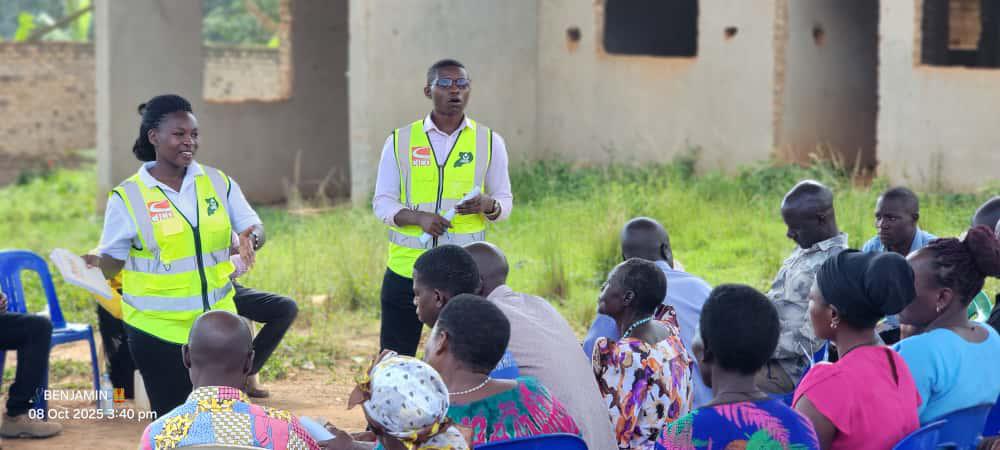
In addition to pad distribution, UNCI integrates menstrual health education sessions that equip girls with accurate information about menstruation, body changes, and self-care. These sessions also engage teachers and community members to reduce stigma and create supportive school environments. UNCI is training teachers and health workers to deliver comprehensive menstrual hygiene lessons. The MHH curriculum covers puberty education, proper use and care of reusable pads, hygiene practices, and challenging myths and stigma
As Uganda enters the 2026 school year, addressing menstrual hygiene must be treated as an essential component of education policy and programming. Government, civil society, development partners, and communities must work together to ensure that no girl misses school simply because she is menstruatin